What Are UGC Ads? Types, Costs, Hooks and Testing
UGC ads are paid ads built from customer or creator videos. See five ad types, what they cost, how to write the first 2 seconds and what to measure.
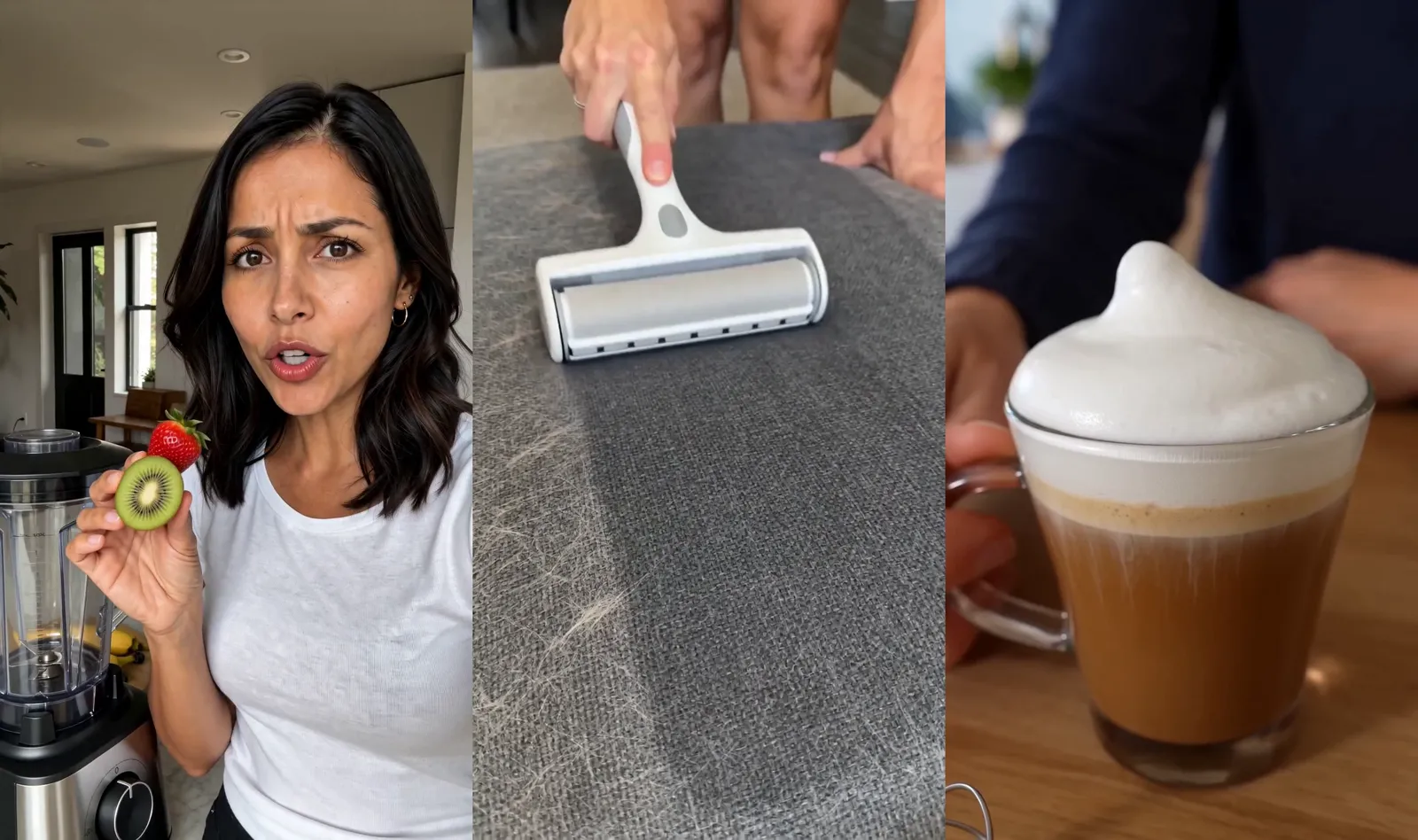
UGC ads are paid ads made from user-generated content: short videos by customers or creators that look like ordinary posts, not studio commercials. You pay to show them to people who don't follow the person who made them. Below: where they run, what they cost, five ad types with examples, how to write the first two seconds, and what to measure.
The five videos below are AI-generated previews from ShelfPic's video template library. The people in them are not real customers, and the products are not real brands. Videos start muted. We checked every platform rule and price quoted here on October 5, 2026.
What is a UGC ad, and how is it different from UGC?
UGC becomes a UGC ad the moment money goes behind it. A customer posting an unboxing is UGC. The same video, shown in feeds through your ad account, is a UGC ad.
| Organic UGC | UGC ad | |
|---|---|---|
| Who posts it | The customer or creator, on their own account | You, from your ad account or with the creator's permission |
| Who sees it | Their followers, plus whatever the algorithm adds | The audience you target and pay to reach |
| What you need | Nothing, it's their post | Written permission to use the video in ads, for a set time |
| Who made it | A real customer or a creator | A customer, a paid creator, or your own team, sometimes with AI |
Brand-made videos in the same casual style are called UGC-style ads. If AI makes the people in them, say so, and never present them as customers. To film and script the video itself, see our UGC video guide.
Where do UGC ads run?
UGC ads run wherever short vertical video runs. The real choice is whose name appears above the ad: yours, or the creator's.
| Option | Whose name shows | What you need |
|---|---|---|
| Upload to your own ad account (Meta, TikTok) | Your brand | The video file and the right to use it in ads |
| TikTok Spark Ads | The creator's account, or yours | A video code the creator generates and sends you |
| Meta partnership ads (Facebook and Instagram) | The creator's handle, with your brand | Partnership ad permission from the creator |
TikTok Spark Ads let you advertise organic TikTok posts, including other creators' posts with their authorization. The creator generates a post code in the app and picks how long it's valid: 7, 30, 60 or 365 days. Views, likes and follows from the paid run count toward the original post. Source: TikTok's Spark Ads FAQ.
Meta partnership ads are what Meta used to call branded content ads. To run one, you need permission from the partner whose handle appears on the ad. That permission can cover one post or a whole account, and the creator can revoke it at any time. Source: Meta's partnership ad permissions page.
How much do UGC ads cost?
A UGC ad has two costs: making the video, and the ad spend that shows it. You set the ad spend yourself. The production cost depends on where the video comes from.
| Source | Production cost | Where the number comes from |
|---|---|---|
| A customer's existing video | No fee, but you need their permission | — |
| A paid UGC creator | $150–$300 per video | promer.ai, a UGC ad vendor, article updated September 23, 2026 |
| A creator marketplace | "Starting at $91" per video | influee, a UGC creator marketplace, article dated June 11, 2025 |
| AI video with ShelfPic | 50 credits per second at 480p, so 500 credits for a 10-second ad | Our pricing page |
The two creator prices are quotes from companies that sell UGC services, not independent market data. Before you hire anyone, ask what the price includes:
- How long you may run the video in ads
- Whether you get the raw file
- How many hook versions you get
- Whether Spark Ads or partnership ad permission is part of the deal
On ShelfPic, video is a paid feature. The 100 free sign-up credits don't cover even the shortest 4-second clip. The Starter plan is $19 a month for 800 credits. A failed generation gives its credits back.
What types of UGC ads work for products?
Most product UGC ads use one of five formats. Pick the one that answers the question your buyer has right before they buy.
1. Testimonial or review
A person tells the camera what the product does for them. It works because it sounds like advice from a friend. It is also the format most open to faking.
AI-generated template preview: Blender Review. The presenter isn't a real customer. This is a demo in review style, not a review.
A real testimonial needs a real customer who really used the product. The FTC says consumer endorsements must reflect the typical experience of people who use the product (FTC advertising FAQs). With an AI presenter, keep the lines to what's visible: what goes in, which button, what comes out.
2. Unboxing
Hands open the box and show what's inside, in the order a buyer will see it. Use it for gifts, sets, and anything where "what's included?" is the question.
AI-generated template preview: Bedside Lamp Unboxing. It ends on the result, a lit lamp, not on the empty box.
3. Demo or tutorial
Show the product being used, one step per shot. A demo answers "is this hard to use?" without anyone saying "it's easy." Here is one as four frames, then the full clip.
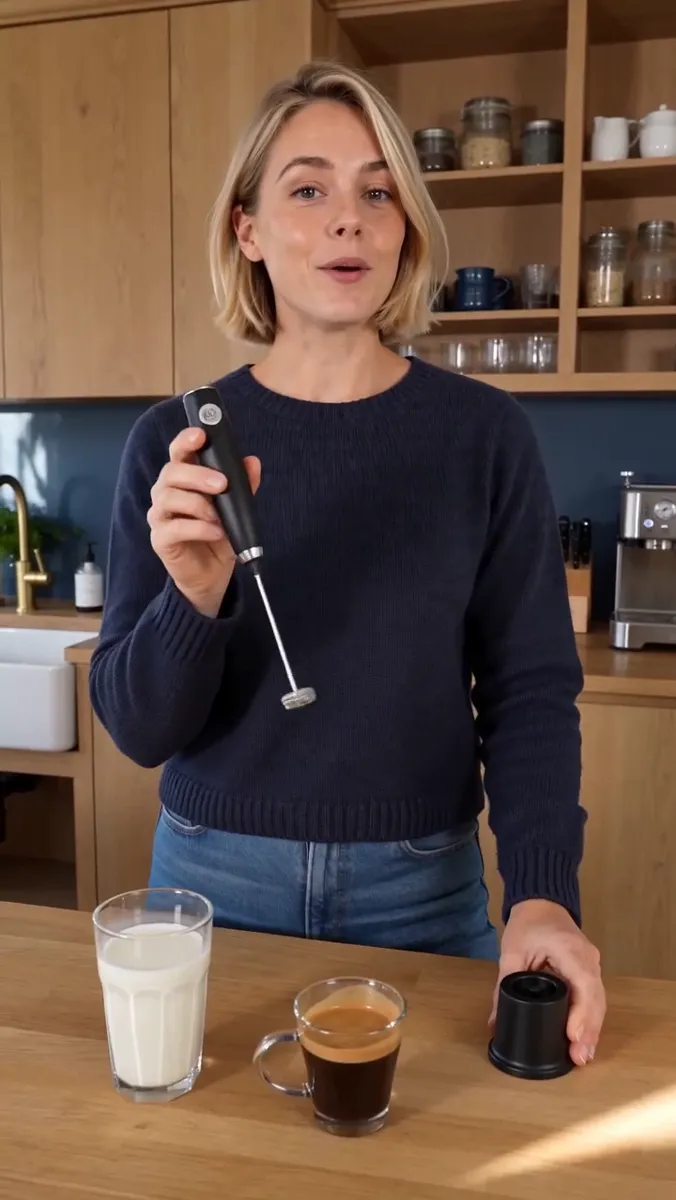 1 Intro
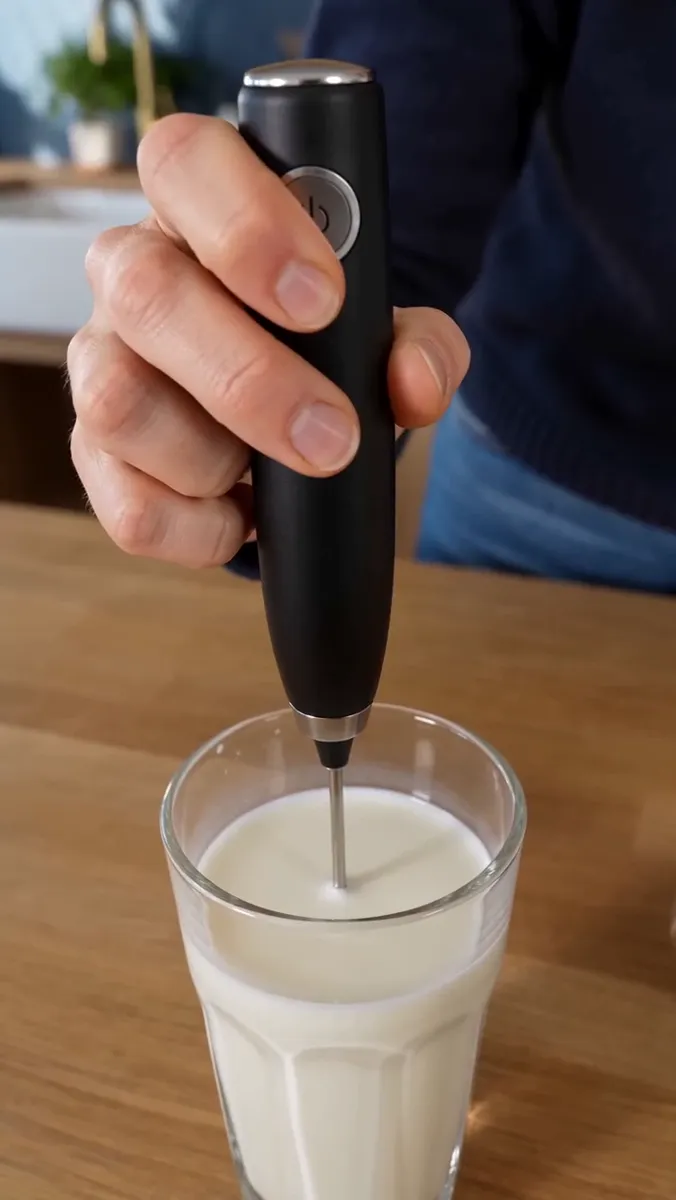 2 Demo
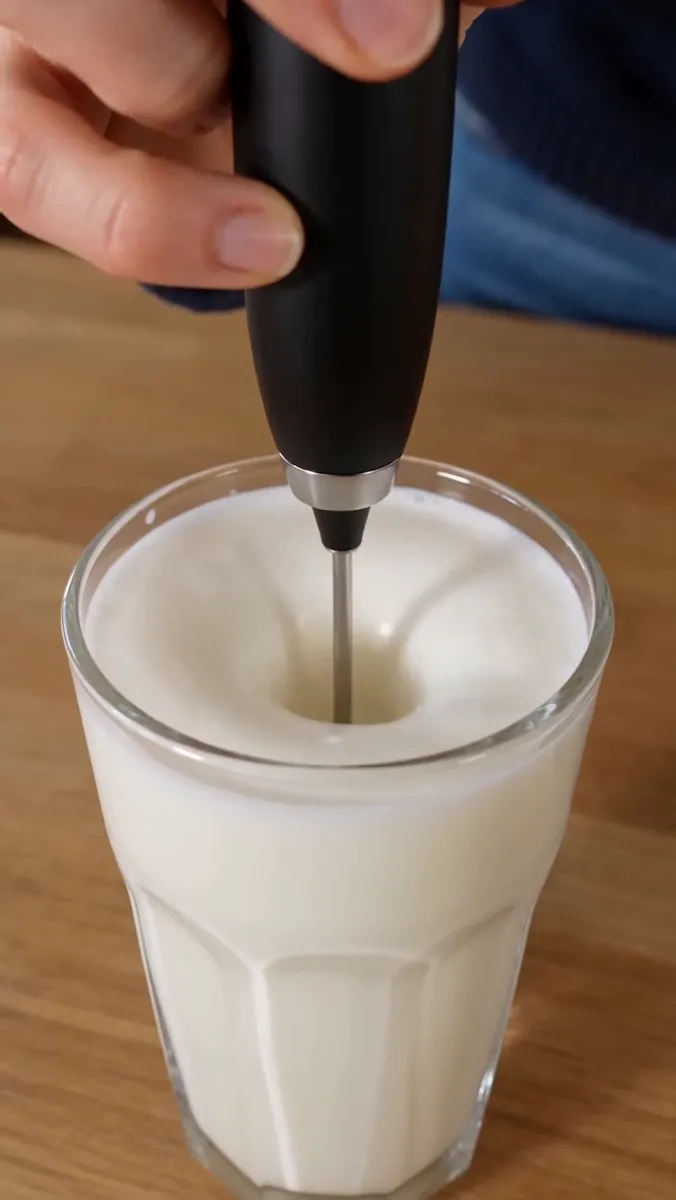 3 Demo
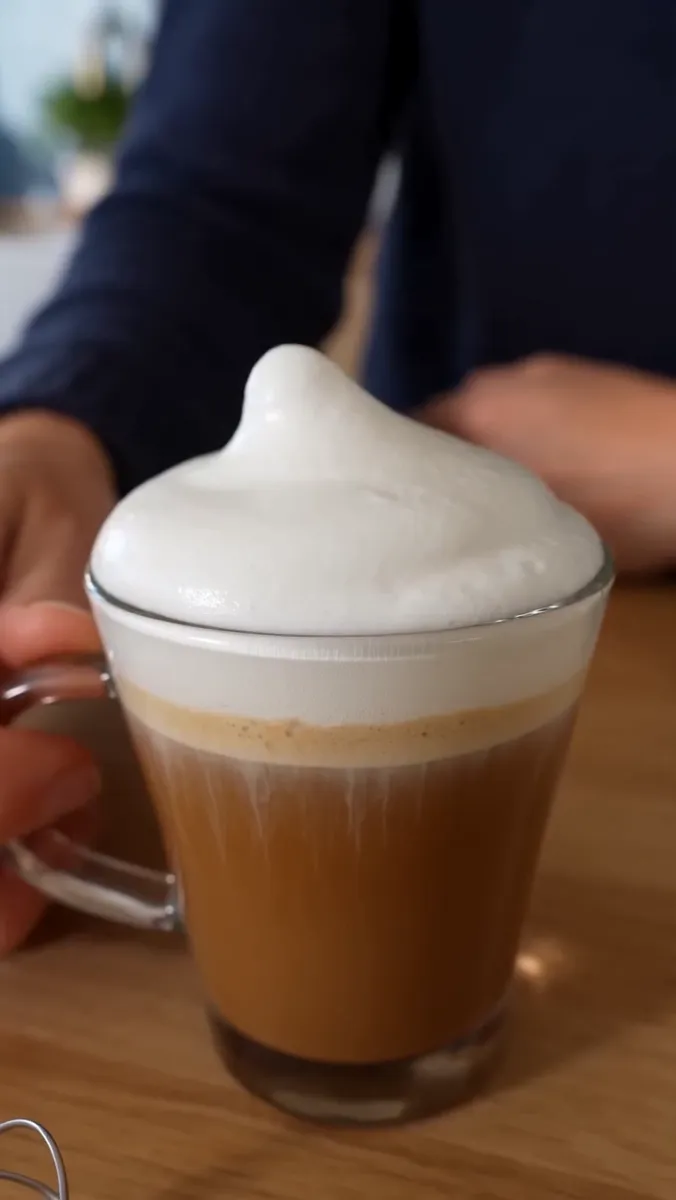 4 Result
AI-generated template preview: Milk Frother Tutorial. Generated foam can't show how the real product performs.
4. Before and after
Show the problem, the product at work, then the same spot fixed. The split moment in the middle, half dirty and half clean, is the frame that makes the point.
AI-generated template preview: Sofa Hair Remover Results. The clean stripe is generated, so it can't show what a real roller does.
This is the format where AI is weakest as proof. A generated "after" shows what the AI drew, not what your product does. The FTC expects you to have evidence for objective claims before the ad runs. For a real before-and-after claim, film the real product on a real stain, couch or pan.
5. Problem and solution
Open on a frustration the buyer already has, then show the product removing it. Unlike before and after, the payoff is a calmer routine, not a measurable result.
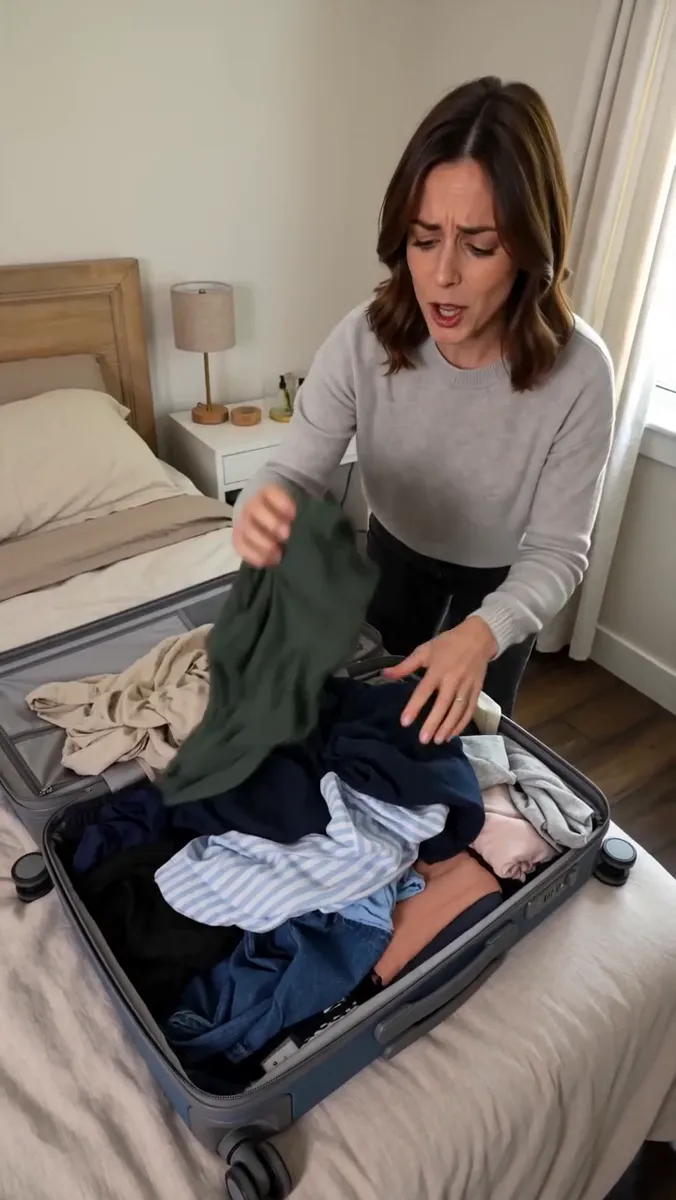
AI-generated template preview: Packing Cubes Fix. The suitcase and the bedroom don't match between the first and last shots. Check for slips like this.
How do you write the first 2 seconds of a UGC ad?
Show the product or the problem in the first frame, and say one line a buyer would say. The platforms measure this window directly. TikTok reports 2-second video views (TikTok video play metrics). Meta reports 3-second video plays (Meta Business Help Center).
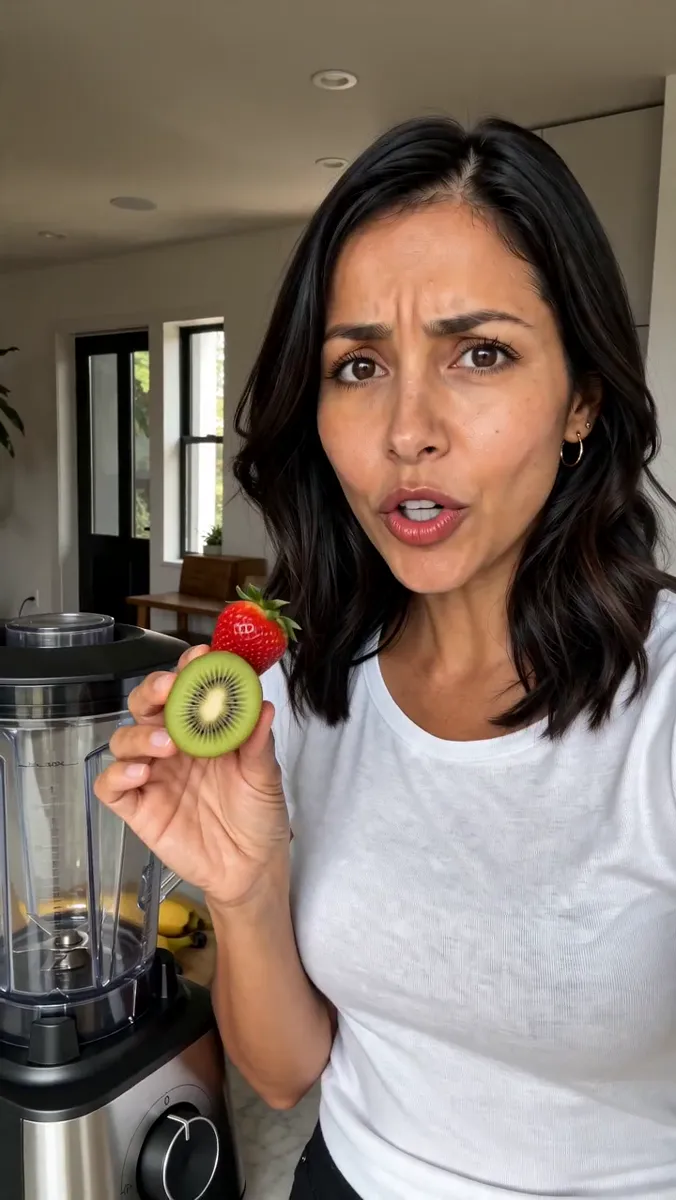 Doubt
Doubt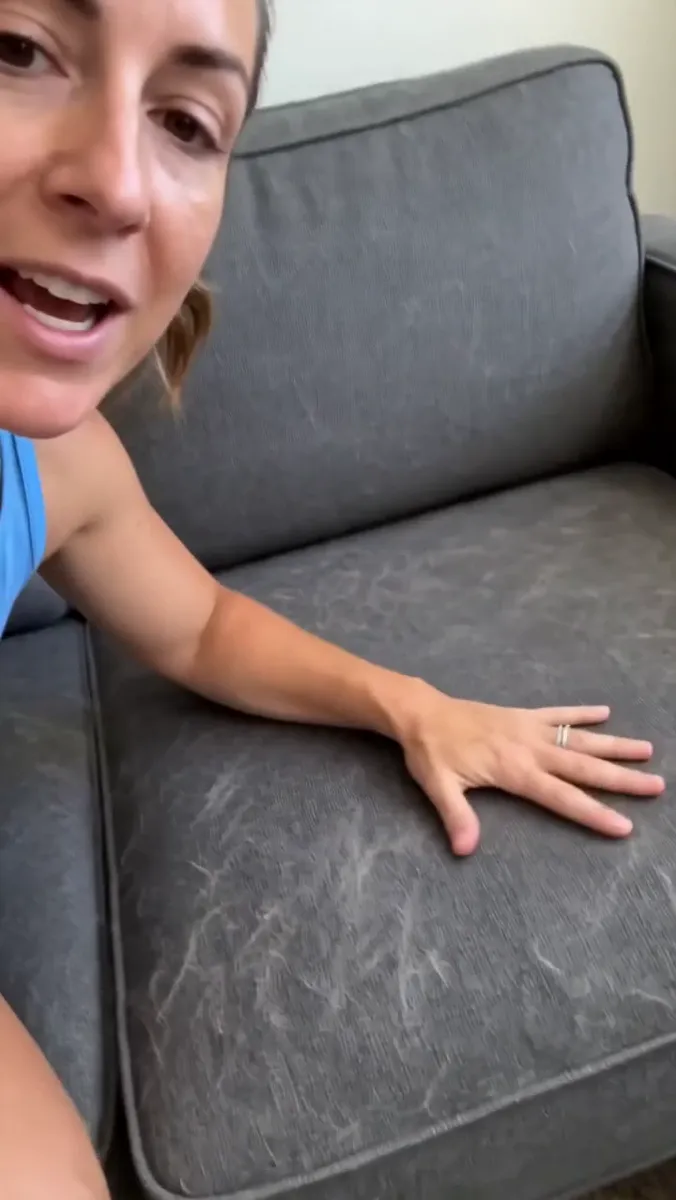 Problem
 Mess
Mess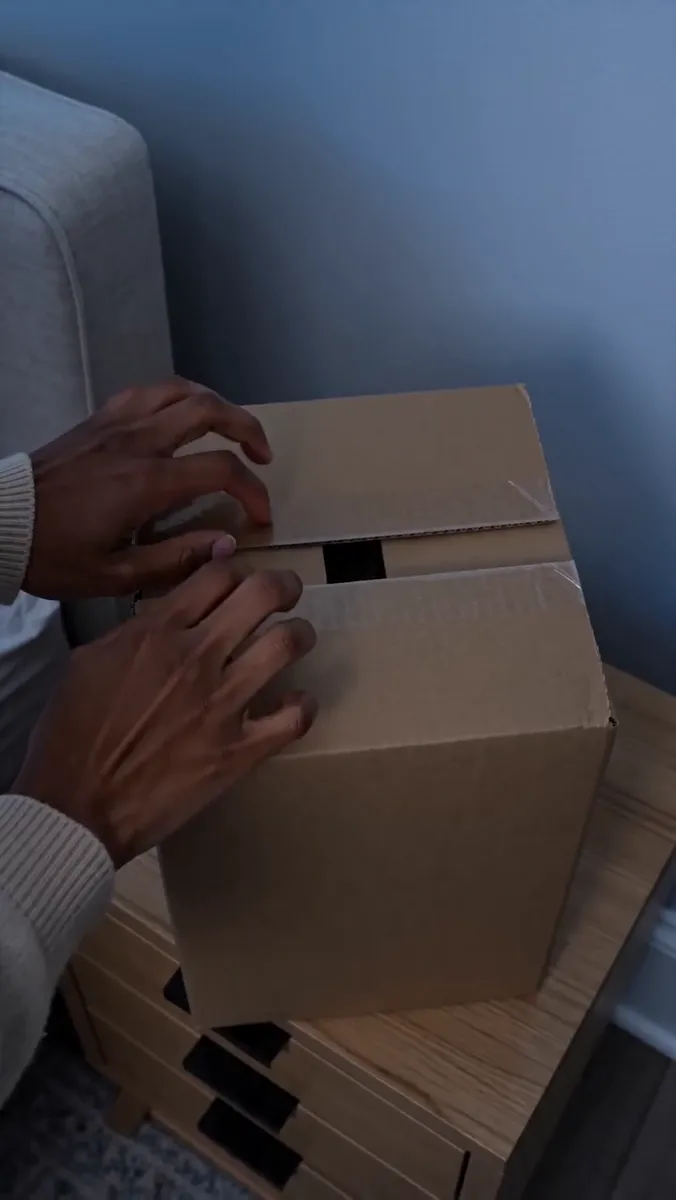 Box
BoxHere are five hooks we wrote for the products above. Words in brackets are placeholders. Replace them with something that is true of your product.
| Hook type | Frame one | Line |
|---|---|---|
| Show the mess | Fur-covered couch cushion, close up | "Grey couch, one cat, three days." |
| Ask the buyer's question | Hands on a closed box | "Does it come with the shade? Let's open it." |
| Start at the result | A finished foam-topped coffee | "This foam took [your real time]." |
| Name the buyer | An overflowing suitcase | "If you pack the night before every trip, watch this." |
| Break a habit | A whole kiwi held to the camera | "Stop peeling your kiwi. [Only if your blender really handles the skin.]" |
Write the hook so the picture makes sense with the sound off. Skip "Hey guys" and logo intros, which waste the first second. After the hook, show proof, then end on the product, like the milk frother frames above.
Customers, creators or AI: which source should you use?
Neither wins by default. Each source is good at something the others can't do.
| Real customers | Paid creators | AI (UGC-style) | |
|---|---|---|---|
| Cost per video | No fee | $91–$300 in the vendor quotes above | Credits per second |
| Speed | Unpredictable | Depends on the creator's schedule | Minutes per clip |
| Can it prove results? | Yes, if it's typical | Only with honest disclosure of payment | No |
| Permission needed | From the customer | Written in the creator contract | None for the video; label AI people as AI |
| Best use | Testimonials, real results | Reaching a creator's audience, polished takes | Testing formats and hooks before you pay for more |
AI earns its place early. You don't yet know whether an unboxing or a problem-and-solution ad works for your product. Testing that with AI costs credits, not creator fees. Once a format wins, a real customer or creator can make the version you scale.
To make one, start with a clean product photo. Then open the AI video ad generator and pick one of its 10 formats, such as UGC, Unboxing, Tutorial, Problem & Solution or Before & After. Clips run 4 to 15 seconds.
Check every result before it runs:
- Product. The shape, colour and label must match your real product.
- Contents. An unboxing must show exactly what's in your box, no more.
- Claims. Template scripts are examples. Delete any line you can't back up, like a time or a result.
- Continuity. Watch for things that change between shots, like the suitcase above.
Label AI people as AI. The FTC's Q&A on its reviews and testimonials rule says there's no blanket ban on AI avatars. A fake or false testimonial is still prohibited, and an avatar can still be deceptive (FTC Q&A). If you also use AI images of people in an Amazon listing, the image guide asks for a contains-synthetic-performer tag; see our Amazon image requirements guide. Rights for real creators and customers are covered in the FAQ of our UGC video guide.
How do you test UGC ads, and what should you measure?
Change one thing at a time. Keep the middle and ending, and swap only the hook. Compare the versions in the same campaign, on the same budget.
Four numbers tell you where an ad loses people. Hook rate and hold rate are ratios advertisers calculate themselves from the platform's video metrics.
| Metric | What it tells you | How to calculate it |
|---|---|---|
| Hook rate (thumb-stop rate) | Did the opening stop the scroll? | 3-second video plays ÷ impressions on Meta, or 2-second views ÷ impressions on TikTok |
| Hold rate | Did people stay after the hook? | ThruPlays ÷ 3-second plays on Meta, or 6-second views ÷ 2-second views on TikTok |
| CTR (click-through rate) | Did people want a closer look? | Link clicks ÷ impressions |
| CPA (cost per acquisition) | Did it sell at a price you can live with? | Ad spend ÷ purchases |
On Meta, a ThruPlay counts when someone watches 15 seconds, or 97% of a shorter video (Meta's ThruPlay page). TikTok's 6-second view also counts a full play of a shorter video, or an engagement in the first 6 seconds.
We don't quote "good" benchmarks. They change with product, price and audience. Your best benchmark is your own last ad.
Why is my UGC ad not working?
Find the first number that's weak. That's where to fix.
| Problem | Likely cause | Fix |
|---|---|---|
| Low hook rate | Frame one shows a face saying hello, not the product or problem | Open on the problem or the result; test three hooks on the same body |
| Good hook rate, low hold rate | The middle repeats the hook or moves slowly | Cut to one action per shot; drop the second selling point |
| Good hold rate, low CTR | The ad ends without showing the product clearly | End on the product in hand, held still for a beat |
| Good CTR, high CPA | The listing doesn't match the ad | Check the colour, set and price shoppers land on match the video |
| Comments call it fake | The presenter or result looks generated | Replace the testimonial with a real customer; label AI clearly |
Is UGC still a thing?
Yes. The platforms keep building ad products around creator posts. TikTok updated its Spark Ads FAQ in June 2026, and Meta renamed branded content ads to partnership ads.
What has changed is how easy fake UGC has become. AI can make a convincing presenter in minutes. Meanwhile, the FTC's rule on fake reviews and testimonials took effect on October 21, 2024. So use real customers for real results, and label AI clearly everywhere else.
FAQ
Are UGC ads legal?
Yes, with permission and honest disclosure. You need the right to use the video in ads, and paid creators must disclose the relationship (FTC endorsement guides). A testimonial must come from a real person and reflect a typical result.
Do I need permission to run a creator's video as an ad?
Yes. A public post doesn't give you advertising rights. Get written permission covering where the ad runs and for how long. Spark Ads and partnership ads also need an in-app authorization from the creator.
Can I use AI-generated people in UGC ads?
Yes, but never present them as real customers. The FTC has no blanket ban on AI avatars, but fake or false testimonials are prohibited. Keep their lines to what the video shows, and label them as AI.
Can I make UGC ads for free?
Partly. A customer's video costs no fee once they give permission. ShelfPic videos need a paid plan, because the free sign-up credits don't cover a clip.
Start free
Turn your next photo into a listing-ready shot.
Upload any product photo and get studio-quality visuals in seconds — no studio, no shoot day.
Try ShelfPic free