Gemini 4 Argon vs Claude Opus 5.5 for UGC Ads
We had Gemini 4 Argon and Claude Opus 5.5 write the same five UGC video ads. Opus won two, Argon one, two tied, and Argon invented a product claim.
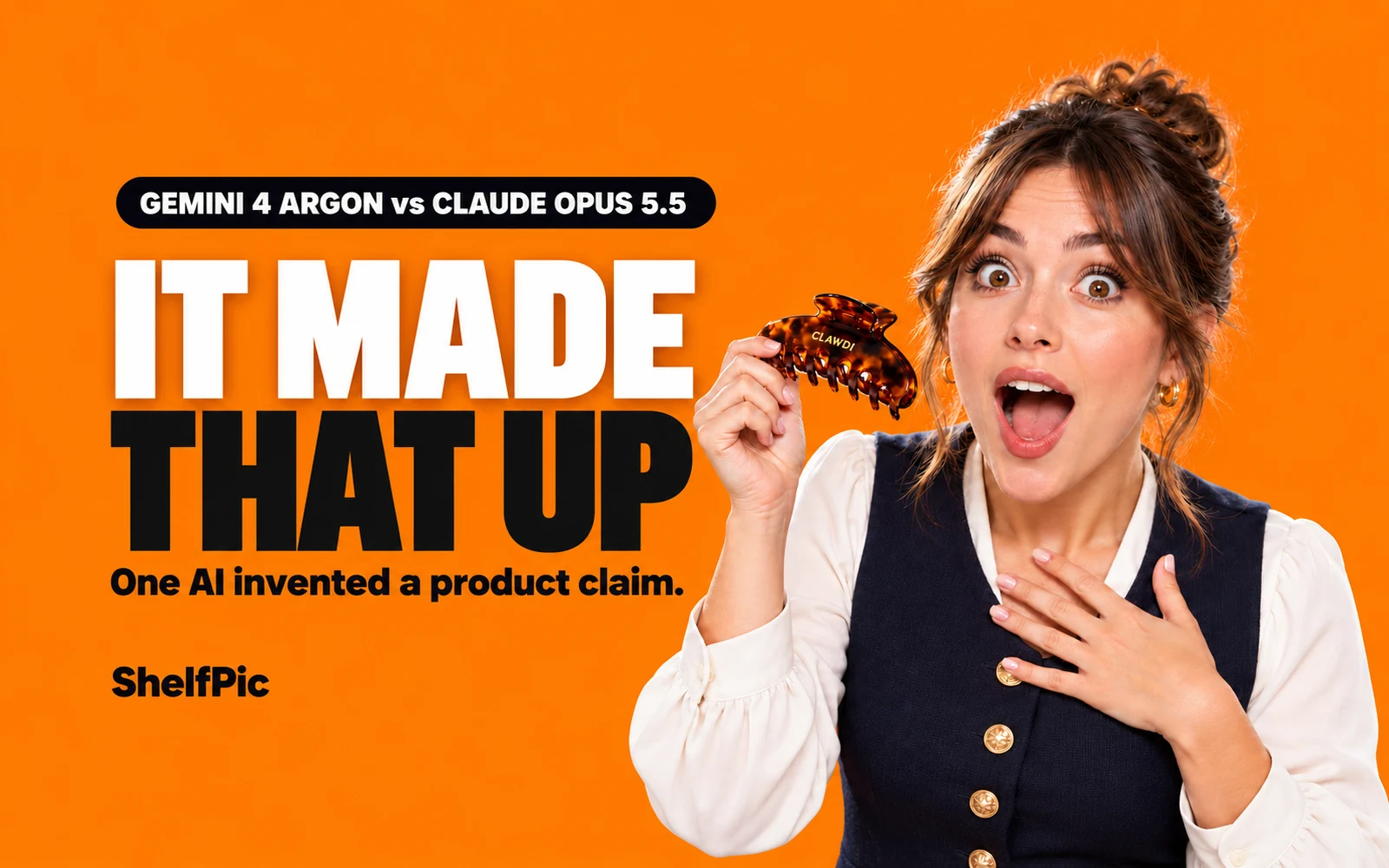
The claw clip ad starts like a hundred others. She opens the box, holds the clip up to the camera and says: "I finally caved and ordered the Clawdi clip everyone keeps talking about... it holds my whole bun for eight hours without pulling."
Sounds like a normal ad, right?
Except nobody tested that clip for eight hours. Nobody said anyone was talking about it. Gemini 4 Argon wrote that line. We spotted it in the script first, then played the video to check whether it had been dropped somewhere along the way. It hadn't. Word for word.
We gave Argon and Claude Opus 5.5 the same five ad templates and the same product photos. Opus won two, Argon won one by a hair, and two were ties. Opus didn't invent a single claim.
Argon invented one. And it's the kind of line a seller ends up having to answer for.
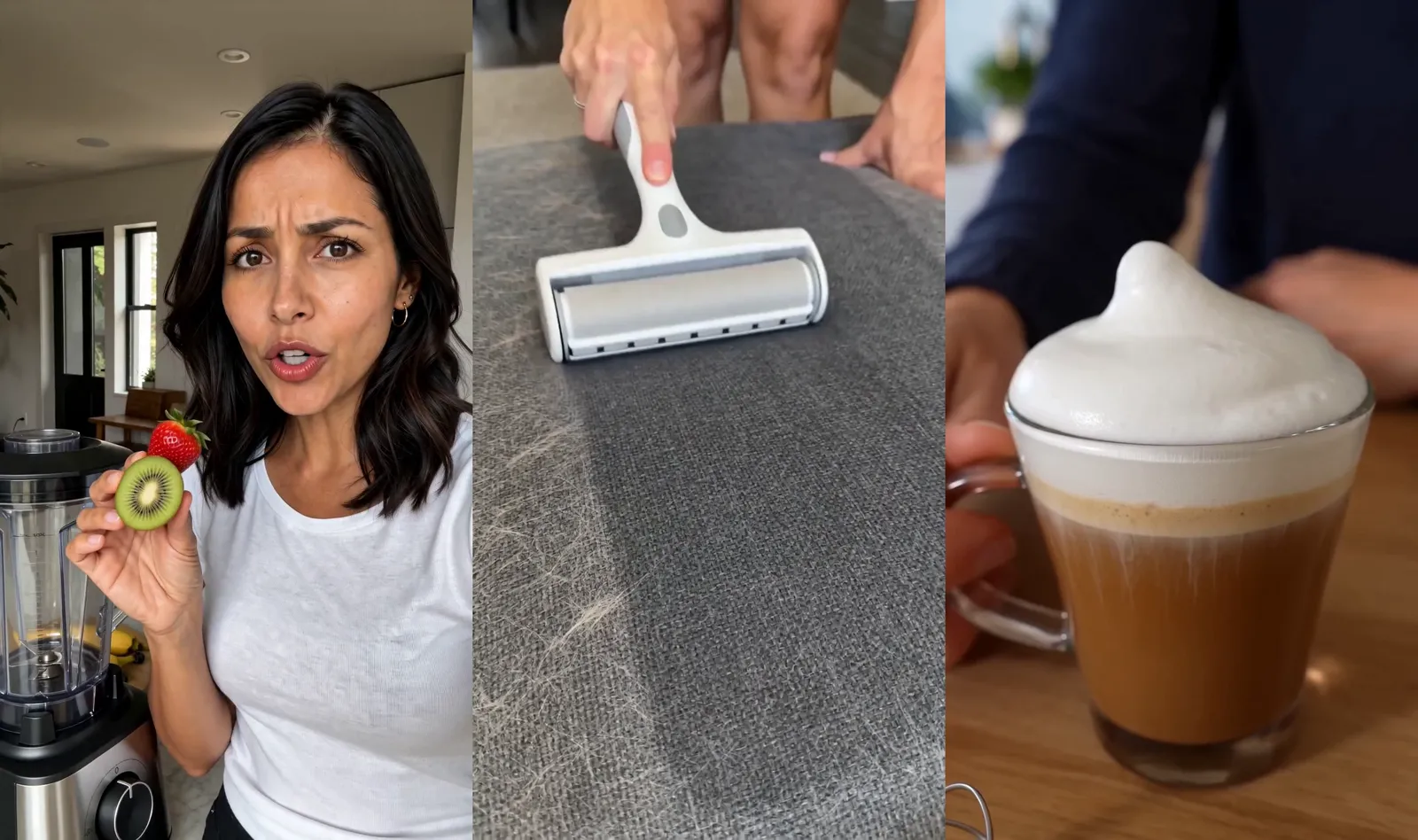
Every video in this post is AI-generated with ShelfPic video templates. The people are not real customers and the brands are made up. Each clip plays Opus first, then Argon.
Why we tested this
Gemini 4 Argon came out on October 13, 2026. Almost every early test we saw had it writing code or building 3D scenes. Fair enough. But we make ShelfPic, which turns a product photo into short UGC-style video ads, so the question we actually cared about was simpler: can it write an ad?
Here's how that works on our side. A language model reads a short template and the product photo, then writes the shot list and the voiceover. A video model turns that script into a 15-second vertical video. Swap the writer and you get a different ad. Sometimes a very different one.
What makes an ad script hard
Writing a product ad from one photo sounds easy. It isn't, and there are three ways to get it wrong.
The first is promising what nobody can prove. The model sees a photo and nothing else. It has no idea how long a clip holds or whether anyone is talking about it. So any number or "everyone loves it" it adds is made up, and then the video puts it in the mouth of a real-looking person, looking straight at the camera.
The second is stopping before the "after". Short ads work when the last shot shows the product doing its job: the sunglasses on in the street, the curls done, the clip in her hair. End one beat early and you've wasted the 15 seconds.
The third is misreading the photo. The applicator, the material, the one detail that deserves a close-up. Get those wrong and the voiceover is describing some other product.
How we tested
- Five templates, one per category: unboxing (claw clip), try-on (tortoiseshell sunglasses), tutorial (heatless satin curling rod), review (lip tint), product-only (honey jar).
- Both models got exactly the same input: the same template, product photo and creator photo. Only the writer changed. Same video model, same settings: 15 seconds, 480p, 9:16.
- One run per model per template. No retries. We used the first video every time, good or bad.
To be honest, five runs is a small test. Run it again and the two ties could tip either way, so treat the score as a first look, not a ranking.
Here's what both models received:
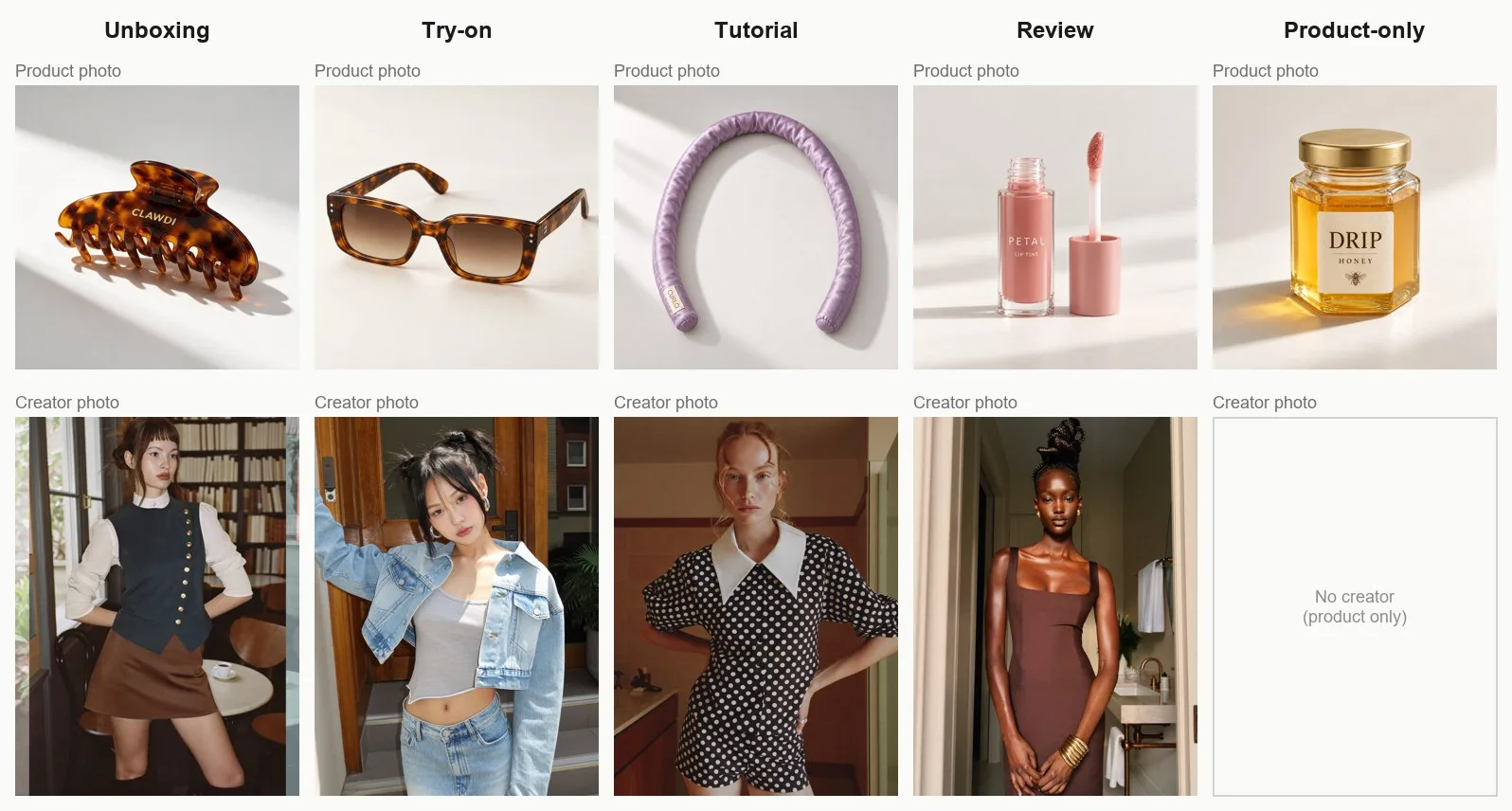
| Template | What it asks for |
|---|---|
| Unboxing | Open the package, reveal the clip and react, end on a close look at one real detail. No product claims provided. |
| Try-on | Squint in the sun, put the sunglasses on, end on a complete street look. |
| Tutorial | Drape the rod over your head, wrap both sides around it, unwrap the next day to natural curls. |
| Review | Pick up the tint and show the tip and the colour, apply and press lips together, end on the finished colour. |
| Product-only | The jar on a breakfast table in morning light, a spoon lifting a long golden thread, honey melting into toast. |
Does it invent claims?
The unboxing template gave both models nothing to claim. Nothing at all. Here's what each one wrote for the voiceover:
| Claude Opus 5.5 | Gemini 4 Argon |
|---|---|
| "I caved and ordered another claw clip. It's tortoiseshell. Wait, hold it to the window. The dark spots go amber and glow. Yeah, this one's living in my bun." | "I finally caved and ordered the Clawdi clip everyone keeps talking about... it holds my whole bun for eight hours without pulling." |
Read the Opus one again. Every line is something the camera can actually show. It noticed the tortoiseshell pattern in the photo and built a whole shot around it: hold the clip up to the window, watch the dark spots turn amber. That's a better idea than anything in the template. Its video also ends with the clip in her hair, which the template never asked for. Argon's ends with the clip still in her hand.
This is the video at the top of this post.
Across all five scripts, Opus made up nothing. Argon made up the eight hours and the crowd.
Does it land the "after"?
Try-on first. The template ends on a complete street look. Opus walks her outside: "Okay, now this street look actually feels finished." Argon's last shot is indoors, at a doorway. The street look just never happens. Opus wins this one easily.
The tutorial is where it got interesting.
A heatless rod works because you sleep on it. That's the whole trick. Opus kept that step: "Drape the rod over your crown, wrap each side around it, ends tucked in. Sleep on it, unwrap in the morning." Argon cut it: "Wrap the other side down to the ends. Slide it out for soft curls." Read literally, you wrap your hair and pull the rod straight back out. That's not how a heatless curl works.
So we expected Opus to win. Then the videos came back. Argon's ends on a full head of curls. When we first skimmed the Opus video, we thought it hadn't shown any curls at all. It does, in the last three seconds, but they're small ones around her face. On the video alone, Argon wins, narrowly. Its script is still the one we'd fix before posting.
Does it read the photo right?
Review. We zoomed in on the lip tint photo, and the tip is textured, with little bristles. Opus got it: "Look at this. Little textured tip. All that pink loaded on. Straight on, one swipe." Argon wrote: "Unscrew the cap and that plush wand glides on." That's a different applicator. In the end it didn't matter much, because neither video gets close enough to show the tip, and the two clips came out about the same. Tie.
Product-only. Both scripts have the honey pull, which is the one shot this template lives or dies on. Opus gave it a close-up of its own and wrote the voiceover around it: "that pull. One long golden thread that keeps going." Argon kept it inside a wider shot: "One full spoonful pulls up a thick, slow golden ribbon." On screen, it's close. Tie.
What Argon did well
We don't want this to read like a takedown, because it isn't one.
- Its tutorial video ended with the best curls of the whole test.
- When it sticks to what's in the photo, it describes products really well: "The warm amber frames and gradient lenses instantly pull my whole denim look together."
- On the lip tint and the honey jar, its videos held up fine next to Opus.
The problem isn't that Argon writes badly. It's that it fills in gaps with things it can't know.
A checklist for AI-written ad scripts
Every item here comes from something we saw in this test. For writing the rest of a UGC brief, see our UGC video guide.
- Read each claim in the voiceover and ask whether you can prove it. Cut numbers, durations and "everyone's talking about it" unless you have the evidence.
- Check the last shot. If it doesn't show the product in use or the result, the ad ends too early.
- If the product needs time to work, like overnight curls or a mask that sets, make sure the waiting step survived.
- Compare the script's description with the photo: applicator, material, colour.
- Give the one detail that sells the product its own close-up.
FAQ
How good is Gemini 4 Argon at writing ad scripts?
It's good at describing what it sees, and in three of our five tests its video tied or beat Opus. But read its scripts before you publish anything. In five runs it invented a claim, skipped the key step of a tutorial and misdescribed an applicator.
Gemini 4 Argon vs Claude Opus 5.5: which writes better UGC ads?
In our test, Opus: two wins, two ties and one narrow loss. It invented no claims, kept the tutorial's overnight step and ended the try-on where the template asked.
Can an AI-written ad script make false claims?
Yes. The model only sees a photo, so any number or popularity claim it writes is made up. Even with no claims in the template, Argon still wrote that the claw clip holds a bun for eight hours and that everyone is talking about it.
Try it
Eight hours is an easy thing for a model to write. It's a much harder thing for a seller to stand behind. The five templates in this test are in ShelfPic Product Shorts: upload a product photo, pick a template, and you get a 15-second video like the ones above.
Start free
Turn your next photo into a listing-ready shot.
Upload any product photo and get studio-quality visuals in seconds — no studio, no shoot day.
Try ShelfPic free